Bookworm KPIs to track its success — These metrics highlight the positive impact of Bookworm+ features, like exclusive content and onboarding, on user retention and conversion rates, contributing to a steady year-over-year growth.
USER RESEARCH
Exploring valuable user insights
I conducted 10 interviews between the ages of 20 and 35 of 50% book readers and 50% non-book readers to understand current app usage and uncover gaps in user interest. Users find the entertainment value of current book apps lacking, making it challenging for both groups to stay engaged.
Users frustrated with current book apps due to lack of personalized features, and limited interactive elements.
COMPETITIVE ANALYSIS
Is The Market Sleeping on Page-Turning Potentials?
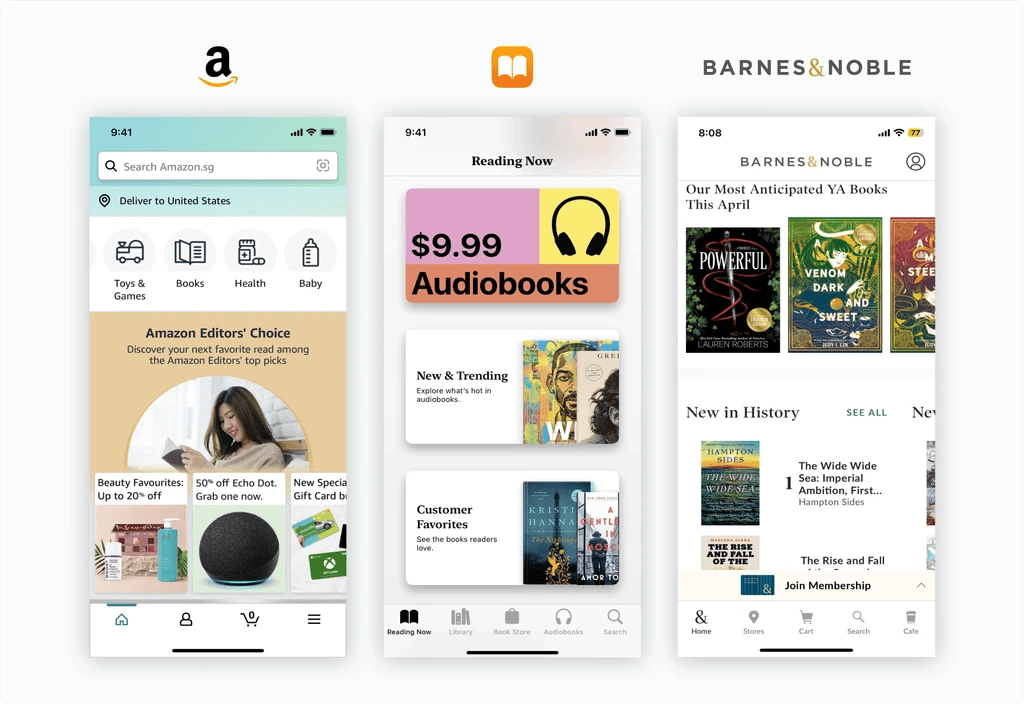
After reviewing a few online book sites, I found their visual design unappealing and overwhelming with the amount of information shown. This challenge detours users from returning back to the app as well as adapting to poor user design.
Platforms here focuses only on ebooks, paperbacks, and audiobooks, there’s a many opportunity to tap into other types of book-related content
DESIGN PRINCIPLE
HMW help users discover more value from Bookworm
through author-driven engagement?
I decided to structure my design to emphasize three specific focal points, each tailored to address the distinct needs and preferences of my target audience, based on user research and competitive analysis insights.
Unique Product Offering
Attract new users with a product that redefines expectations
Simple Navigation
Intuitive experience for effortless user discovery
Boost Author-User Interaction
Strengthen connections through engaging content
END-TO-END FLOW
Mapping a clear, friction-free journey
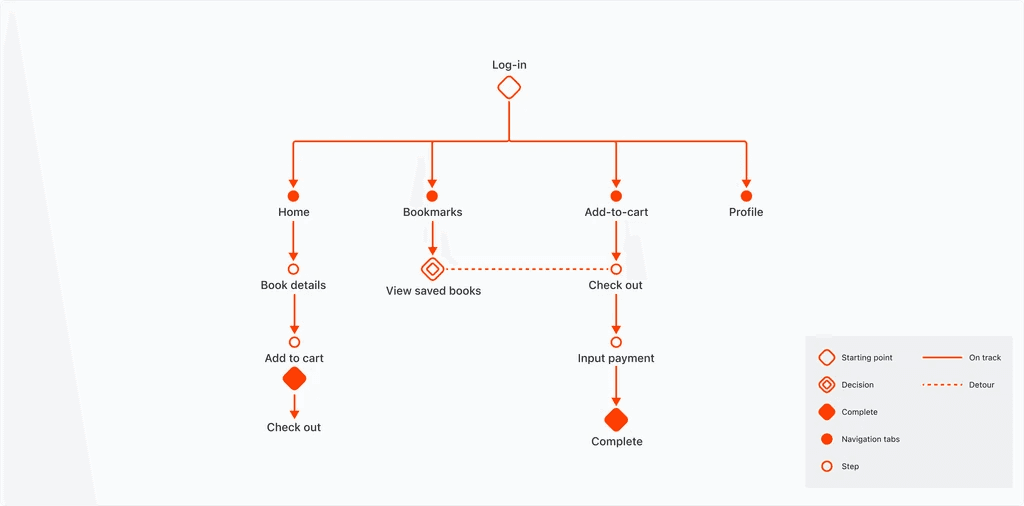
I began outlining my skeleton for a high-level view of the key features to prioritize, such as home/discover, bookmarks, and book details. This approach helps pinpoint impactful areas for product placement and provides a clear reference to stay focused and targeted when making final decisions.
Holistic view of Bookworm's user journey map to pinpoint optimal areas for product placement.
TASK-FOCUSED FLOW
Mapping a clear, friction-free journey
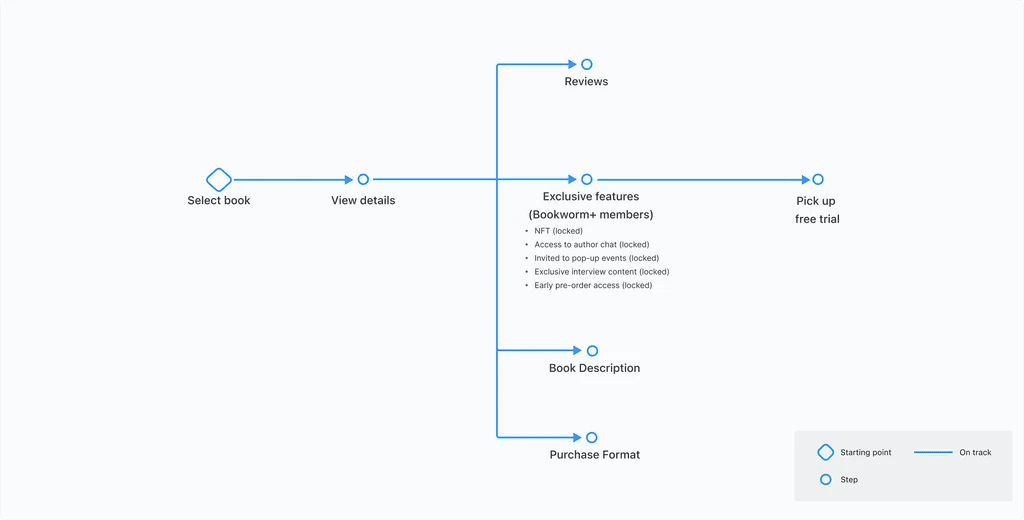
I decided to hone in on the book details flow and created Bookworm+, a premium subscription service offering early access to pre-orders, exclusive author chats, pop-up events, interviews, and signed digital NFTs. This strategy will drive significant growth for authors and elevate Bookworm's revenue.
Focused book details flow from the newly integrated Bookworm+ subscription model with premium offerings.
EXPLORATION
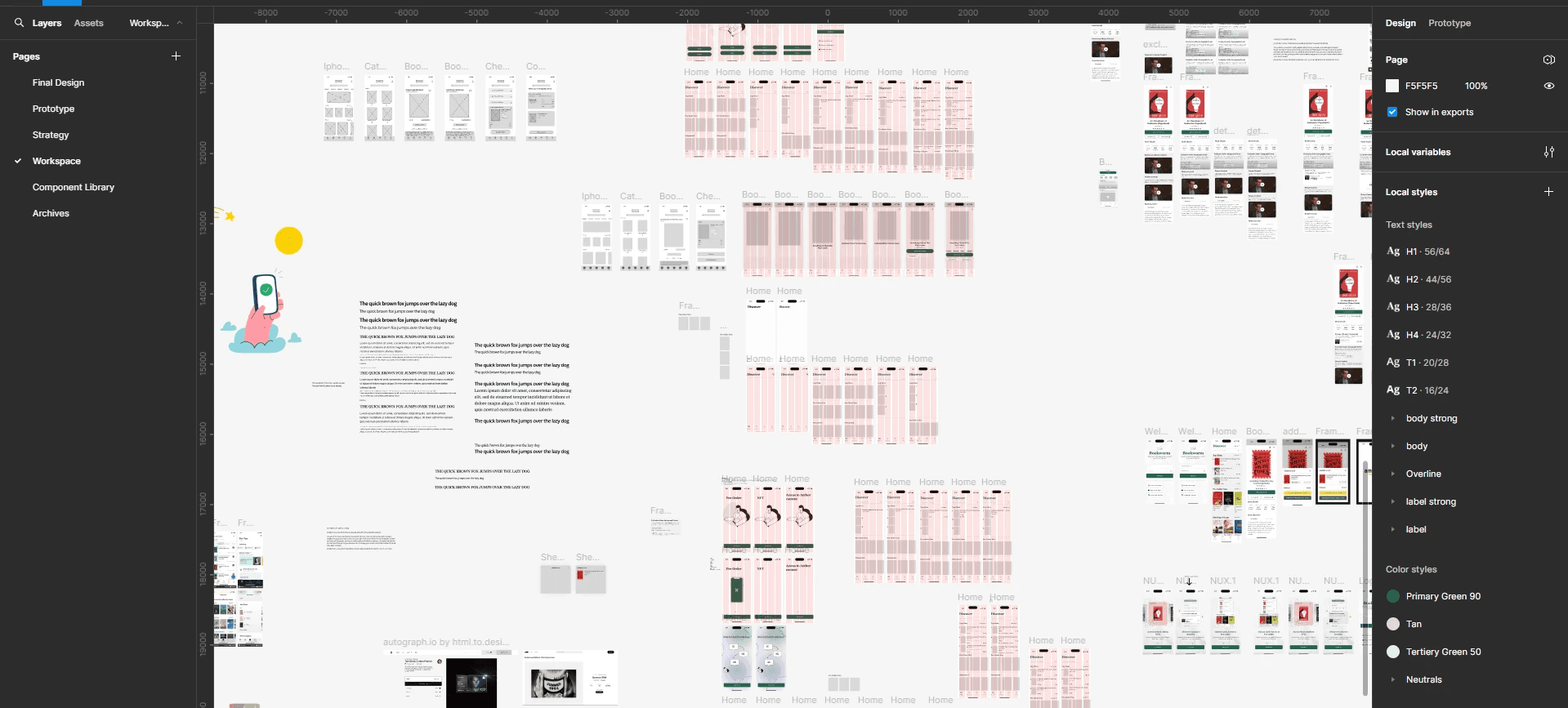
I began brainstorming different design directions to get an overview of which areas I needed to prioritize such as high-traffic user touchpoints and optimal moments for upselling. This approach helped me generate a wide range of ideas without limiting myself to a specific design structure.
Quick look of early exploration process from discovering concept, ideas, and UI to guide the trajectory of Bookworm's app layout.
LOW FIDELITY
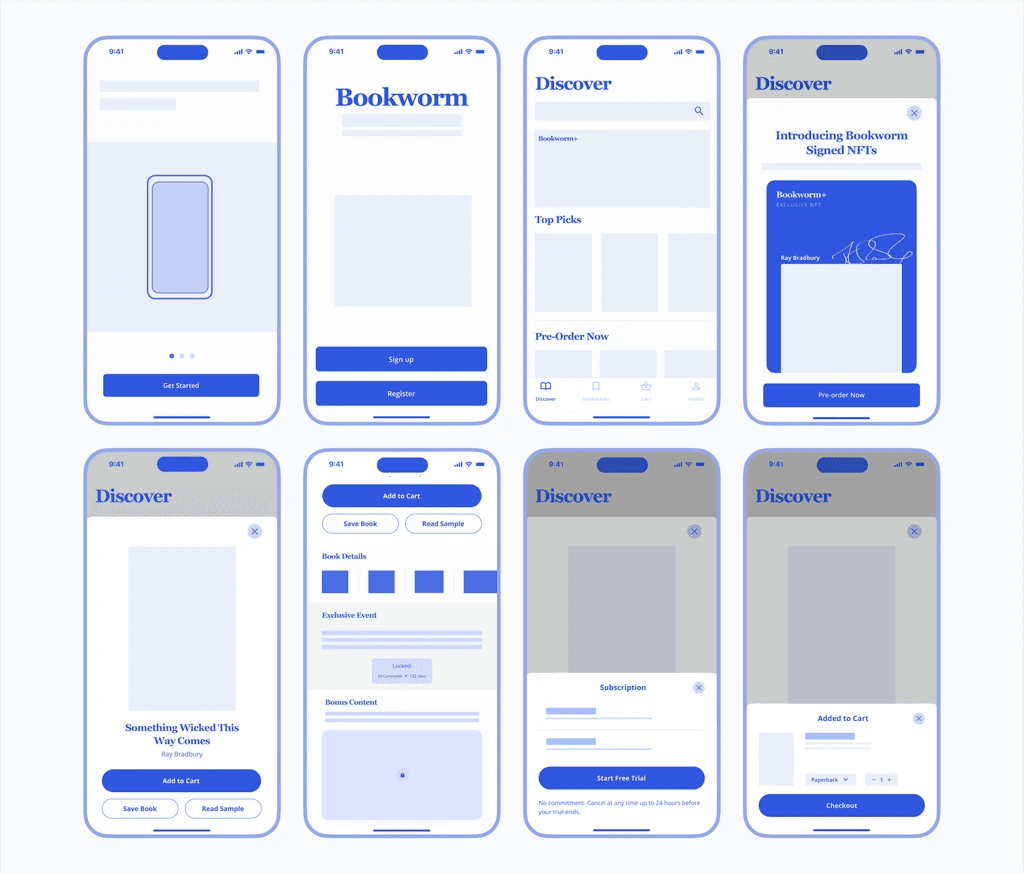
I landed on these these low-fidelity screens cause it felt the most organized and compelling when presenting Bookworm+. This wireframe helped layout what the basic visual model will look like before implementing final touch-ups.
View Figma file↗
Quick look of early exploration process from discovering concept, ideas, and UI to guide the trajectory of Bookworm's app layout.
DESIGN HANDOFF
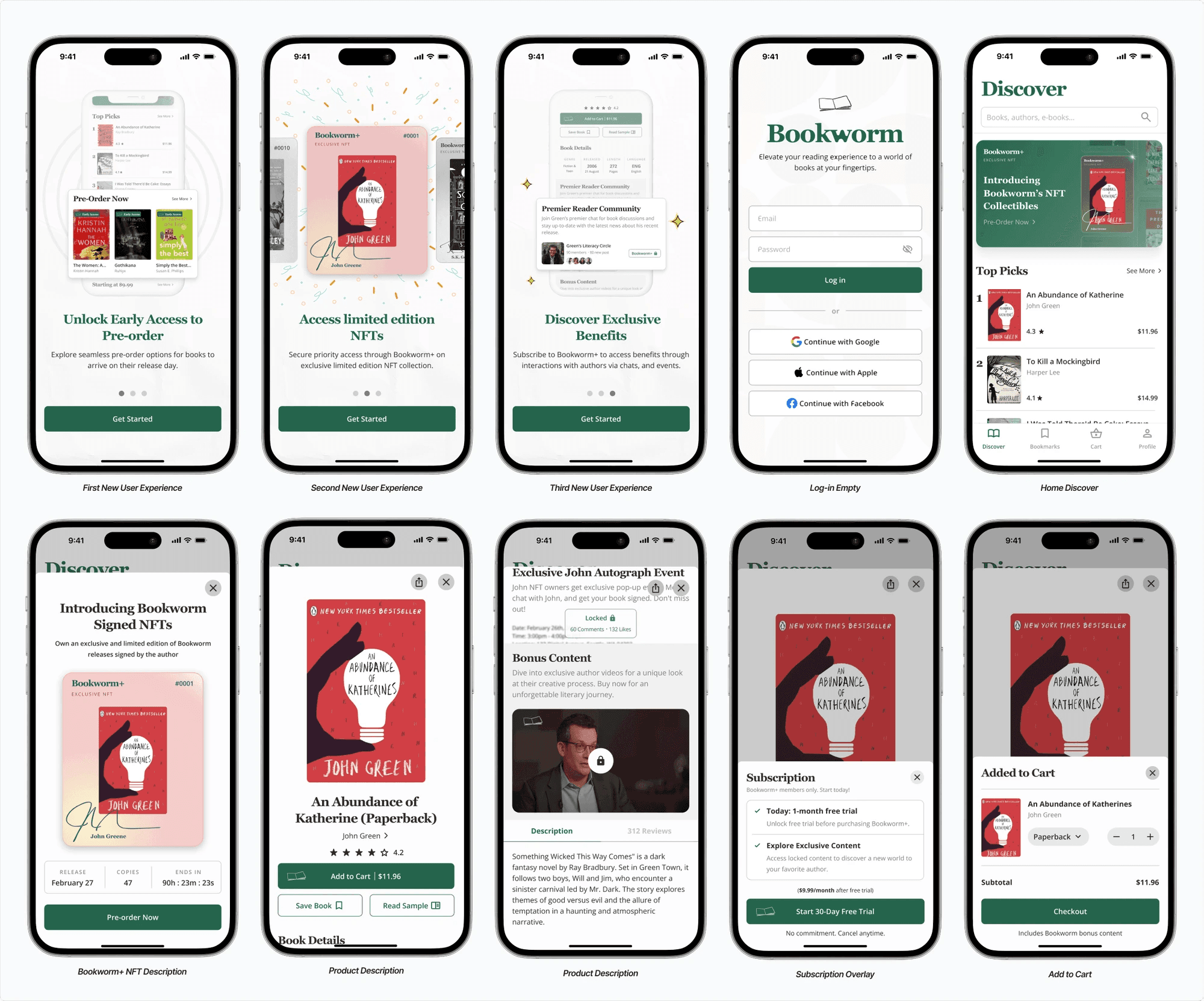
This handoff document includes organized final design, components, colors, typography, providing a well-organized resource for developers to reference.
View final design file↗
Unique Product Offering
Attract new users with a product that redefines expectations
Simple Navigation
Intuitive experience for effortless user discovery
Boost Author-User Interaction
Strengthen connections through engaging content
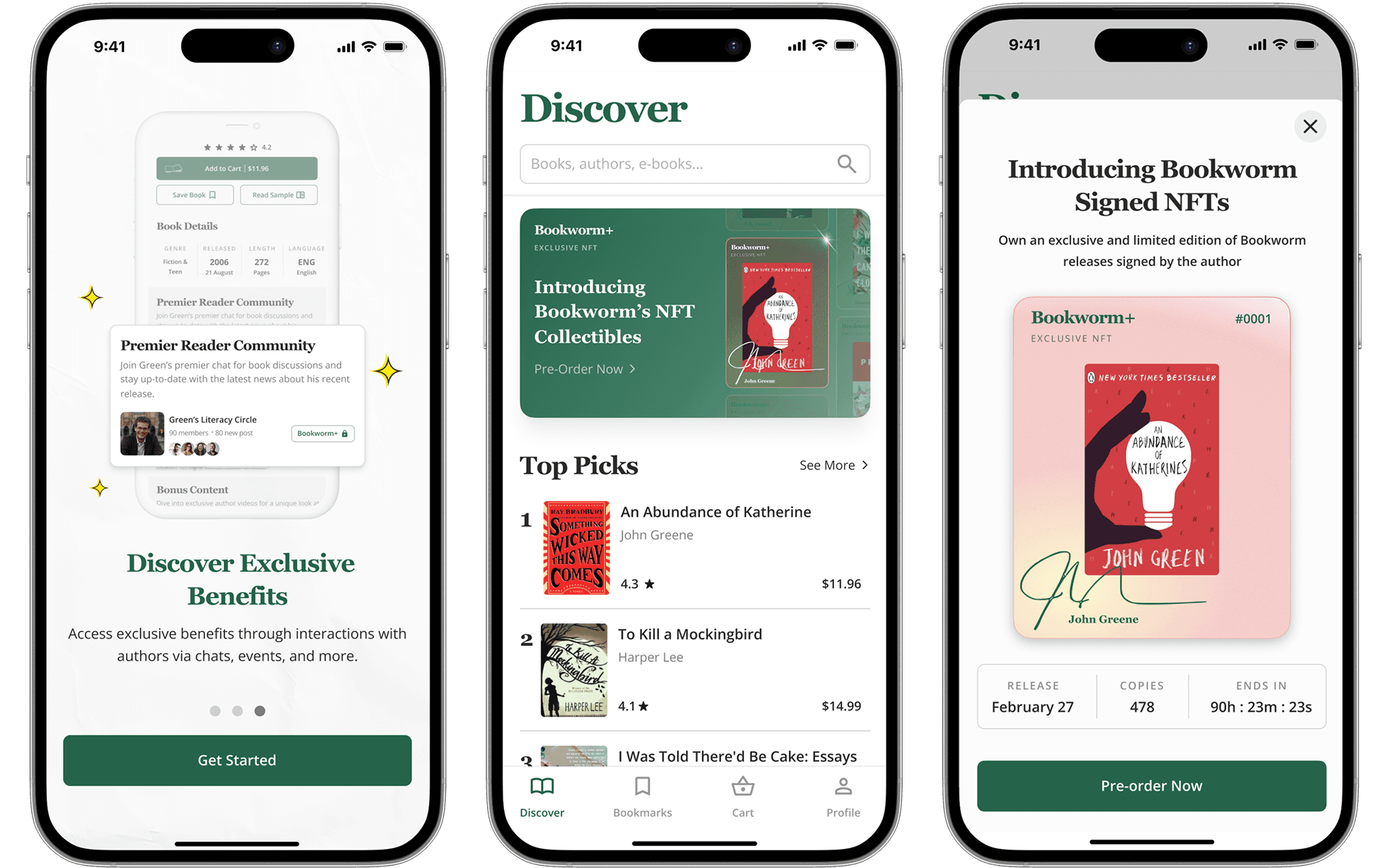
Polished design highlights Bookworm's seamless flow, connecting authors and users through an compelling subscription offering.
Preview of the component library for quick and efficient design updates to simplify any design changes easier down the line.
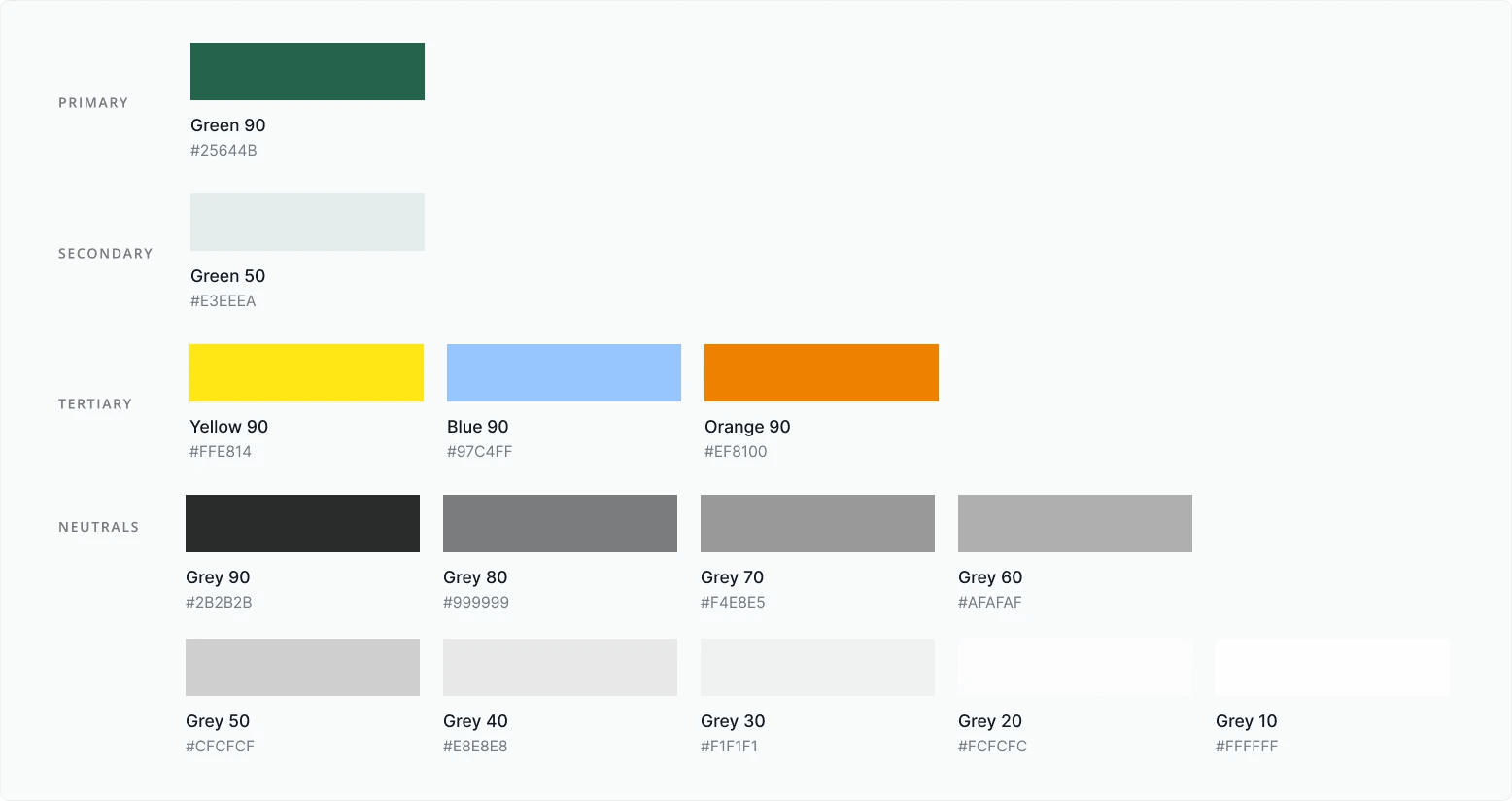
I chose a rich green as the primary color to evoke a cozy library feel, with secondary as a softer green for contrast. Neutral shades of white, black, and gray to maintain consistency, and tertiary colors are used for graphics and NFT cards.
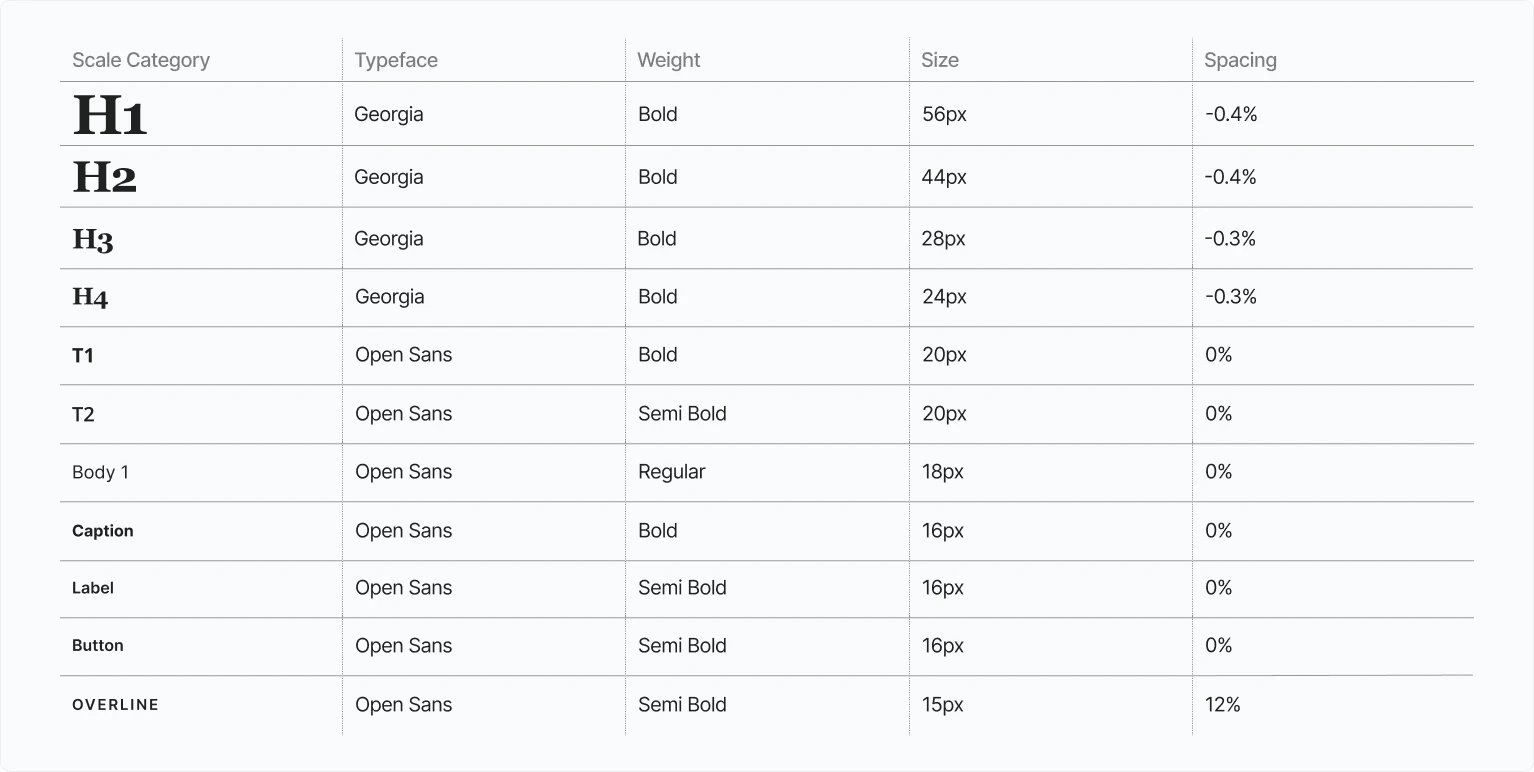
Georgia is selected for headers and titles to capture a classic book style that resonates with readers. To complement it, I paired it with Open Sans for sub-texts, body paragraphs, and product copy, offering a clean and easy-to-read experience.
INTROSPECTIVE
Learnings
This project was super fun to design and I don’t think this app would exist without finding gaps in the market and coming up with a unique and compelling offerings to put in bookworm. I learned a lot about how to sell new features, snappy marketing moments, and upsell products to increase users retention.
Next Steps
I would like to collaborate with developers to bring this app to life. After launch, I would like to focus on adding features to boost user retention, attract non-book readers, and explore additional subscription options to draw in more subscribers.